
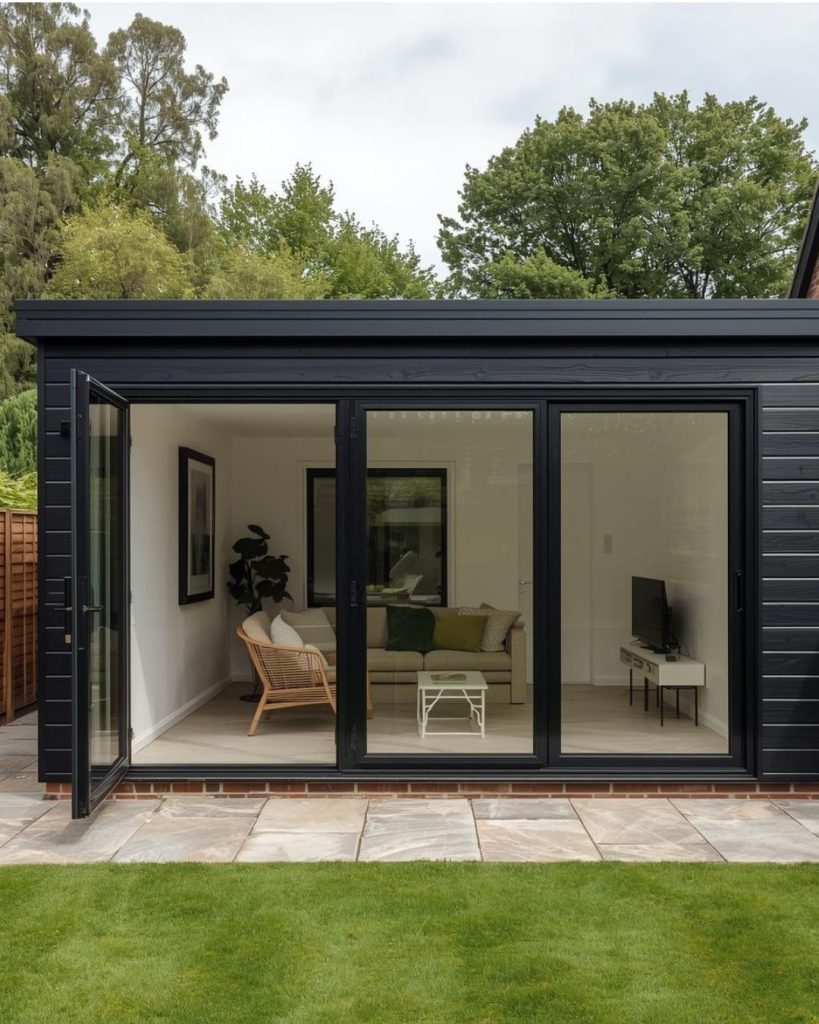
Do I Need Planning Permission for a Garden Room in Maidenhead?
Most garden rooms in Maidenhead do not require planning permission — but the rules have more layers than a simple yes or no, and getting it wrong is an expensive mistake. The Royal Borough of Windsor and Maidenhead has conservation areas across Cookham, Bray and several of the surrounding Thames parishes where the standard permitted development rules are restricted. There are TPO trees that affect where outbuildings can be positioned. And the permitted development rules themselves contain conditions that are easy to overlook when browsing garden room company websites.
This post sets out the permitted development rules that apply to garden rooms in England, explains the specific Maidenhead and Royal Borough considerations, and covers what to check before committing to a design or signing a contract with a supplier.
The Permitted Development Rules
Under the Town and Country Planning (General Permitted Development) (England) Order 2015, an outbuilding is permitted development on most residential properties provided it meets a set of conditions:
Height
A garden room must be a single storey structure. The maximum eaves height is 2.5 metres. The maximum overall height is 4 metres for a dual-pitched roof, or 3 metres for any other roof type — including flat roofs and mono-pitched lean-to roofs. Most garden rooms use a flat or mono-pitched roof, which means the 3-metre total height limit applies in most cases.
The 2-Metre Boundary Rule
Any outbuilding positioned within 2 metres of a property boundary must have a maximum eaves height of 2.5 metres — regardless of the overall height limit. This is the condition most commonly overlooked. A building with a mono-pitched roof at 2.7 metres total height positioned 1.5 metres from the rear fence is not permitted development — it exceeds the 2.5-metre eaves limit for structures within 2 metres of a boundary.
Coverage
The total area covered by all outbuildings and extensions must not exceed 50 percent of the total garden area as it was when the house was first built. For smaller gardens — common on the inter-war semis of Furze Platt and Cox Green — this is a real constraint. A garden room that is perfectly straightforward on a larger plot may exceed the 50 percent threshold on a smaller one.
Position
An outbuilding cannot be positioned forward of the principal elevation of the house. On corner plots and properties with gardens that wrap around the side of the house, what counts as forward of the principal elevation needs careful consideration.
Use
A garden room built under permitted development cannot be used as self-contained residential accommodation designed for independent occupation. A home office, gym, studio, cinema room or hobby room is fine. A separate annexe with a kitchen and full bathroom suite intended for someone to live in independently is not PD.
Where Maidenhead Is Different
Conservation Areas
The Royal Borough of Windsor and Maidenhead has a significant number of designated conservation areas — including Cookham village, Cookham Rise, Bray, Maidenhead town centre, and parts of several other settlements across the borough.
Within a conservation area, an outbuilding is not permitted development if it would be situated on land between the side wall of the dwelling and the boundary of the property. This means that on a conservation area property where the garden wraps around the side of the house, a garden room positioned in that side area requires a full planning application — even if it would be PD anywhere else.
The Chilterns AONB Fringe
Properties in and around Marlow, Bisham, Medmenham and the villages close to the Chilterns AONB boundary sit in a location where planning policy for new structures is more sensitive. Within the AONB, permitted development rights remain in place, but the planning authority gives greater weight to visual impact if a planning application becomes necessary. Confirm the planning position before designing anything.
TPO Trees
Maidenhead and the surrounding Royal Borough has a significant number of trees protected by Tree Preservation Orders — particularly in the established residential areas of Cox Green, Woodlands Park and the Thames villages. Building within the root protection zone of a TPO tree requires consent from the Royal Borough and may require specialist foundation design. Check the protection status of any mature trees close to your intended garden room position before finalising the design.
Article 4 Directions
In some areas of the Royal Borough, Article 4 directions remove specified permitted development rights. Where an Article 4 direction removes the PD right for outbuildings, a planning application is required regardless of whether the structure would otherwise meet the PD conditions. Article 4 directions require a check of the Royal Borough’s planning constraints mapping or a direct enquiry to the planning department.
Building Regulations
Planning permission and building regulations are separate matters. Most garden rooms under 15 sqm do not require building regulations approval. Garden rooms between 15 and 30 sqm do not require approval provided they are at least 1 metre from any boundary and contain no sleeping accommodation. Any garden room over 30 sqm requires building regulations approval regardless of position. The electrical installation always requires Part P notification regardless of the building’s size.
What to Do Before Building
Check the planning constraints for your property on the Royal Borough of Windsor and Maidenhead’s planning portal. Confirm whether your property is in a conservation area, whether there are Article 4 directions affecting it, and whether there are any TPO trees that might affect the siting of the building.
If the structure meets all the PD conditions and there are no additional constraints, it is permitted development and no application is needed. A Lawful Development Certificate from the Royal Borough provides formal confirmation — useful when you come to sell.
If you are unsure, get in touch before signing anything with a garden room supplier. We know the Royal Borough’s planning environment and can advise on the position for your specific property before you commit to a design.