
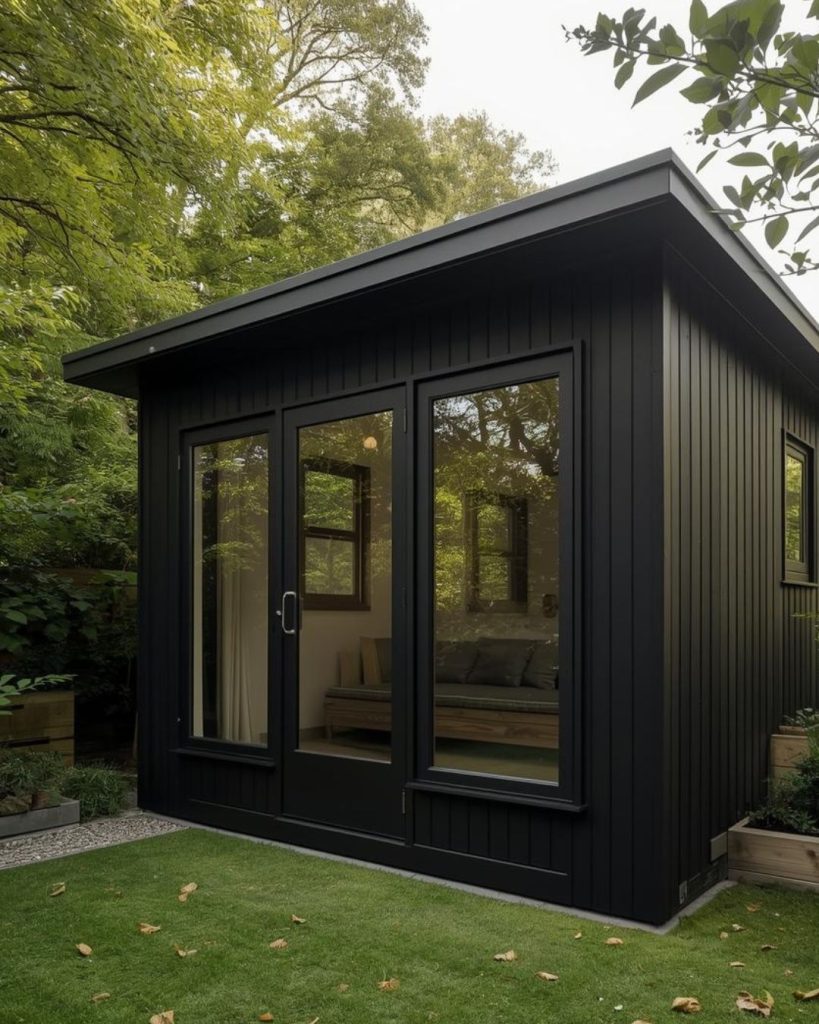
Do I Need Planning Permission for a Garden Room in St Albans?
The planning question is one of the most commonly searched queries for anyone considering a garden room in St Albans — and understandably so. The city has a more complex planning environment than many comparable towns. Conservation areas covering significant parts of the historic centre, Green Belt designations affecting properties on the city’s edges and in the surrounding villages, and Article 4 directions that have removed permitted development rights in some areas all mean that the standard answer — most garden rooms do not need planning permission — requires more qualification in St Albans than it might elsewhere in Hertfordshire.
This post sets out the permitted development rules that apply to garden rooms, explains the specific St Albans considerations that affect whether planning permission is needed, and covers what to check before committing to a design or starting any work.
The Permitted Development Position
For most residential properties in England, a garden room falls within permitted development — meaning planning permission is not required, provided the structure meets a set of conditions. The main conditions relevant to garden rooms are:
Size and height. The garden room must be a single storey structure. Eaves height must not exceed 2.5 metres. Total height must not exceed 4 metres for a dual-pitched roof or 3 metres for any other roof form — including flat, mono-pitch and curved roofs. The vast majority of garden rooms use either a flat roof or a mono-pitched lean-to roof, which means the 3 metre total height limit applies in most cases.
Coverage. The total area covered by outbuildings and extensions on the property must not exceed 50 percent of the total area of land around the original house. On smaller garden plots, a garden room that is straightforward on a larger plot may exceed the 50 percent coverage threshold and require planning permission.
Position. The garden room must not be forward of the principal elevation. On designated land — conservation areas, Areas of Outstanding Natural Beauty and others — no outbuilding is permitted development forward of or beside the principal elevation.
Use. A garden room built under permitted development cannot be used as self-contained residential accommodation. A garden room used as a home office, studio, gym, hobby room or general living space is fine. A structure with a full kitchen, bedroom and shower room that could function as a separate dwelling is not.
The 2.5 metre eaves rule. Any outbuilding within 2 metres of a boundary must have a maximum eaves height of 2.5 metres — regardless of the total height limit. This is a commonly missed condition that affects garden rooms positioned close to side or rear boundaries.
Where Permitted Development Does Not Apply in St Albans
Conservation Areas
St Albans has several designated conservation areas — including the St Albans city centre conservation area covering the historic streets around the Cathedral and the Abbey, and conservation designations in a number of the surrounding villages. Within a conservation area, permitted development rights for outbuildings are more restricted.
In a conservation area, an outbuilding is not permitted development if it would be situated on land between the side elevation of the house and the boundary of the property — even if it would otherwise meet all the standard conditions. If your property is within the St Albans city centre conservation area or any of the village conservation areas across the district, it is essential to establish the exact planning position before committing to a garden room design.
Green Belt
The Green Belt designation in and around St Albans is one of the most significant planning constraints affecting garden rooms in the district. The Green Belt boundary runs close to several of St Albans’s most desirable residential areas, and properties in the villages of Sandridge, Wheathampstead, Redbourn, Colney Heath and the surrounding rural settlements frequently sit within or adjacent to Green Belt-designated land.
Within the Green Belt, the standard permitted development rules still apply — a garden room that meets all the conditions is permitted development regardless of Green Belt designation. However, any garden room that does not meet the permitted development conditions requires a full planning application. And within the Green Belt, the planning policy position on that application is considerably more restrictive than in a non-Green Belt area. If your property sits within or adjacent to the Green Belt and your garden room would not meet the permitted development conditions, professional planning advice before submitting an application is strongly recommended.
Article 4 Directions
Article 4 directions remove specified permitted development rights in defined areas — usually to protect the character of an area from incremental change. St Albans has Article 4 directions in place in some parts of the district, typically in conservation areas or areas of particular character sensitivity. Where an Article 4 direction removes the permitted development right for outbuildings, a planning application is required regardless of whether the structure would otherwise meet the standard conditions. The existence of an Article 4 direction requires a check of the council’s planning constraints mapping or direct enquiry to St Albans City and District Council’s planning department.
Listed Buildings
Properties that are listed buildings — or that sit within the curtilage of a listed building — do not benefit from the standard permitted development rights for outbuildings. Any outbuilding in the curtilage of a listed property requires listed building consent as well as, in most cases, planning permission. The number of listed buildings in and around St Albans’s historic city centre and the surrounding villages is significant — if your property dates from before the mid-20th century and is in a historically significant area, checking its listed status before assuming permitted development applies is essential.
What to Check Before Building a Garden Room in St Albans
Step one — check your property’s planning constraints. St Albans City and District Council’s planning portal allows you to search by address for existing planning history, constraints mapping and any Article 4 directions or designations that affect your property. This takes ten minutes and gives you a clear starting point.
Step two — confirm the proposed structure meets permitted development conditions. Work through the conditions listed above — height, coverage, position, eaves height near boundaries and use. If the proposed garden room meets all conditions and your property has no additional constraints, it is permitted development and no application is needed.
Step three — consider a lawful development certificate. Even where a garden room is clearly permitted development, a lawful development certificate from St Albans City and District Council provides formal confirmation that the structure is lawful. This is not legally required but is useful documentation if you come to sell the property and a buyer’s solicitor raises questions about the outbuilding.
Step four — if in doubt, seek pre-application advice. St Albans City and District Council offers a pre-application advice service that allows homeowners to discuss a proposed project with a planning officer before submitting a formal application. For garden rooms in conservation areas, adjacent to the Green Belt or in any other constrained location, this is a worthwhile step before committing to a design.
Building Regulations for Garden Rooms
Planning permission and building regulations are separate matters. Most garden rooms under 15 sqm do not require building regulations approval. Garden rooms between 15 and 30 sqm do not require approval if they are sited at least one metre from any boundary and contain no sleeping accommodation. Any garden room over 30 sqm requires building regulations approval regardless of position. The electrical installation in a garden room requires notification under Part P of the Building Regulations regardless of the building’s size — always use a registered electrician for the electrical fit-out.
If you are planning a garden room in St Albans, Harpenden, Radlett, London Colney or anywhere across the St Albans district and want advice on the planning position before committing to a design, get in touch. We will assess your plot, confirm what applies to your specific property, and give you a clear picture of what is achievable and what the process involves. Get in touch to arrange a visit.